SHiP (Search for Hidden Particles)
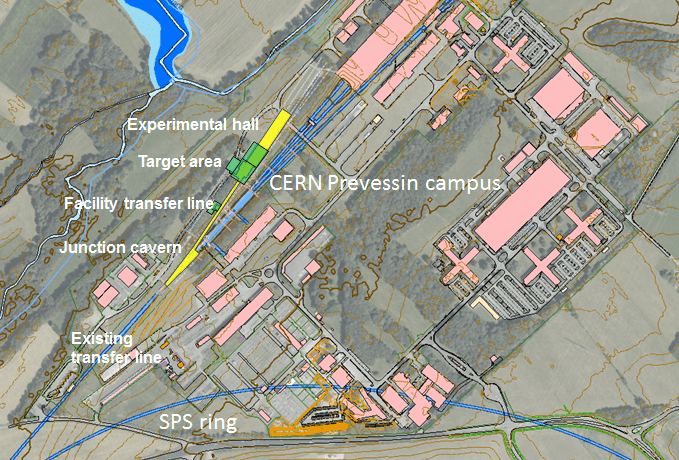
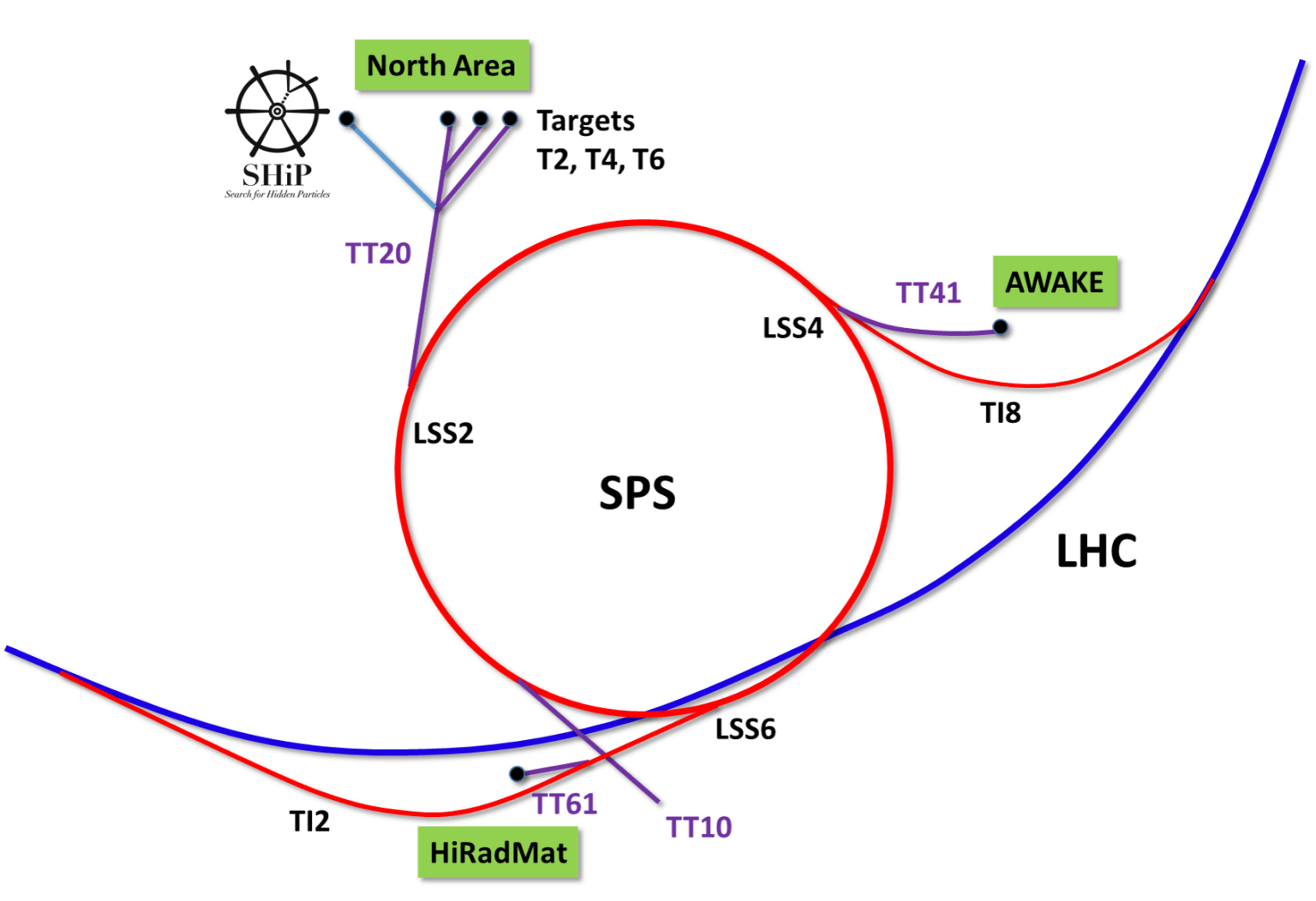
SHiP es un nuevo experimento de propósito general que se está preparando en las instalaciones del Super Proton Synchrotron (SPS) del CERN, junto con una nueva estación de parada de haces (Beam Dump Facility). Su objetivo principal es buscar partículas «ocultas», propuestas por numerosos modelos teóricos que intentan explicar fenómenos aún no resueltos como la materia oscura, las oscilaciones de neutrinos y el origen de la asimetría entre materia y antimateria en el Universo.
Este experimento está diseñado para detectar partículas de larga vida media y con interacciones muy débiles, como los leptones neutros pesados, fotones oscuros, escalares oscuros, partículas tipo axión y partículas supersimétricas ligeras (como los sgoldstinos), así como diversos candidatos a materia oscura ligera.

Gracias a la alta intensidad del haz de protones de 400 GeV del SPS, que produce una gran cantidad de mesones charm y fotones, SHiP podrá realizar una búsqueda exhaustiva de este tipo de partículas en el rango de energías MeV–GeV y a través de una amplia gama de acoplamientos.
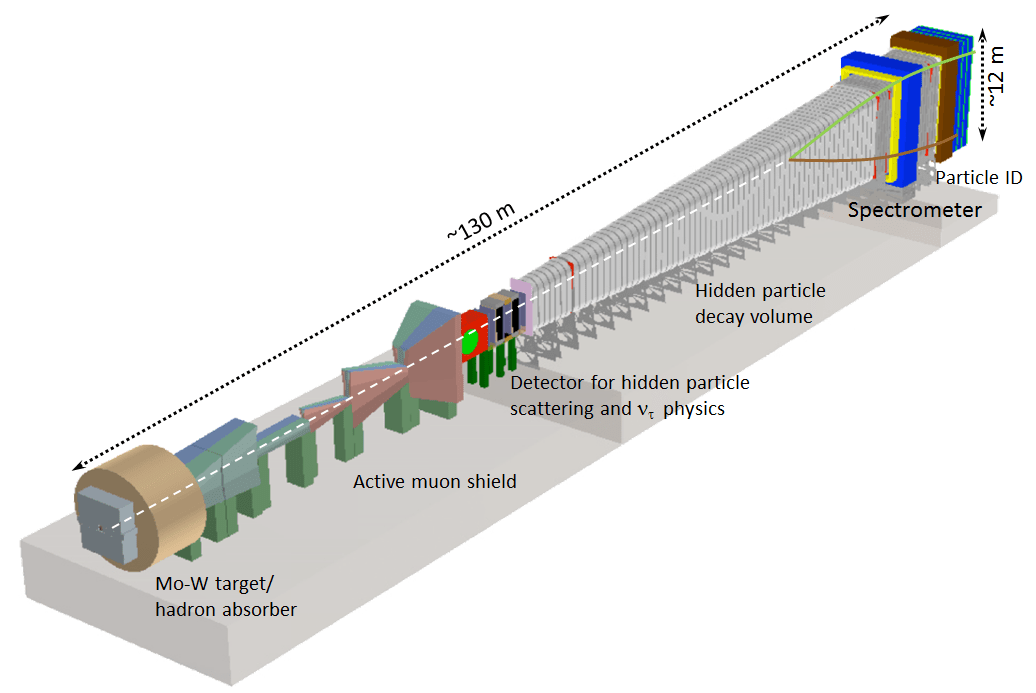
El detector contará con dos subsistemas complementarios: uno para detectar decaimientos visibles de partículas ocultas y otro para registrar señales de dispersión por retroceso de electrones o núcleos. Además, esta instalación es ideal para estudiar interacciones de neutrinos tau, un área aún poco explorada en la física de neutrinos.
En este esfuerzo internacional, destaca la participación de científicas, científicos y técnicos del Instituto Milenio SAPHIR (Chile), quienes contribuyen activamente a través de diversas líneas de colaboración. Entre ellas se encuentra el trabajo conjunto con la colaboración SND@SHiP, el desarrollo del sistema TOF (Time-of-Flight) en cooperación con la Universidad de Zúrich, y la colaboración en el grupo de control de radiación junto al CCHEN (Comisión Chilena de Energía Nuclear). Además, SAPHIR impulsa un programa de técnicos que permite la formación y participación directa de profesionales chilenos en esta frontera de la investigación en física de partículas.