
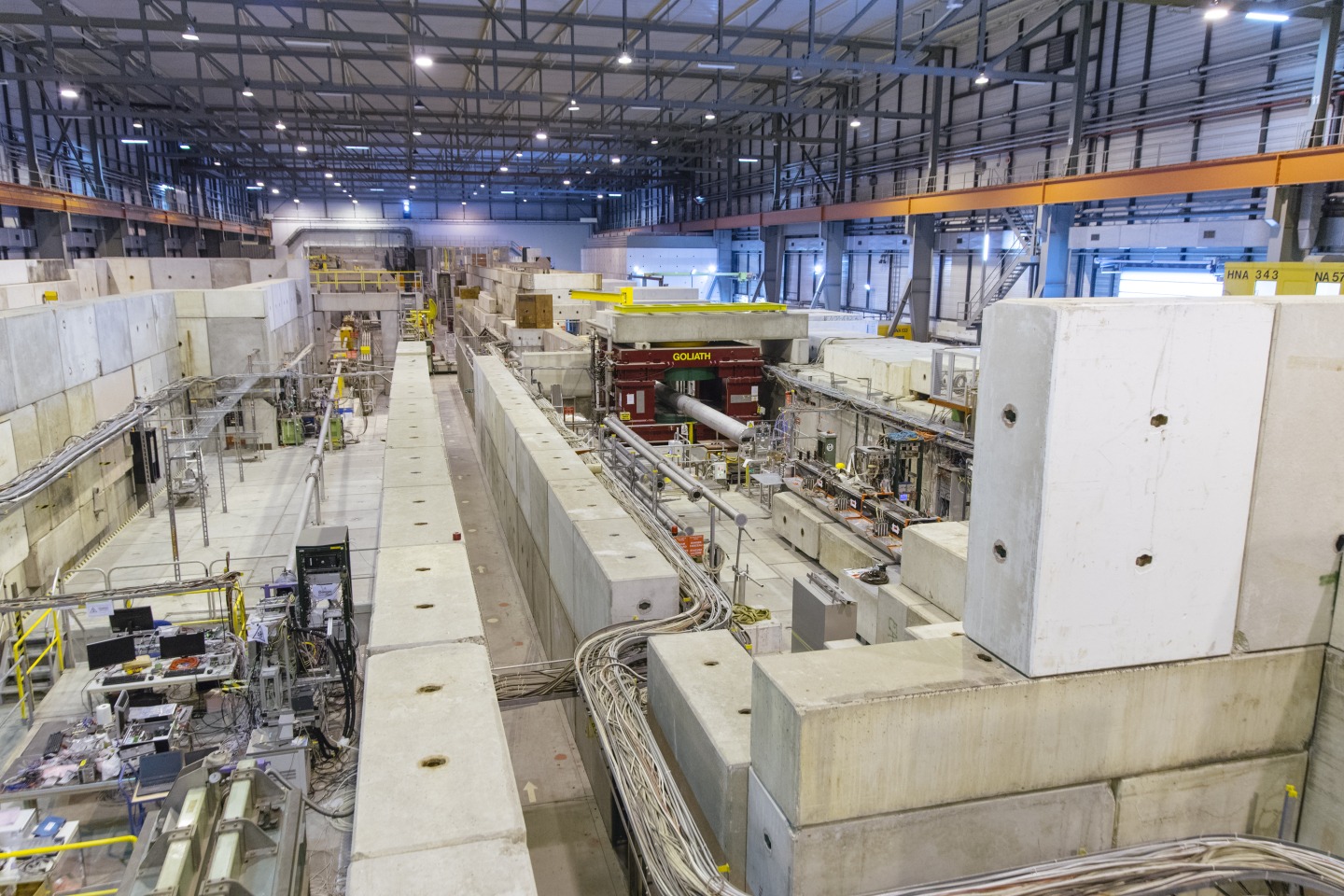
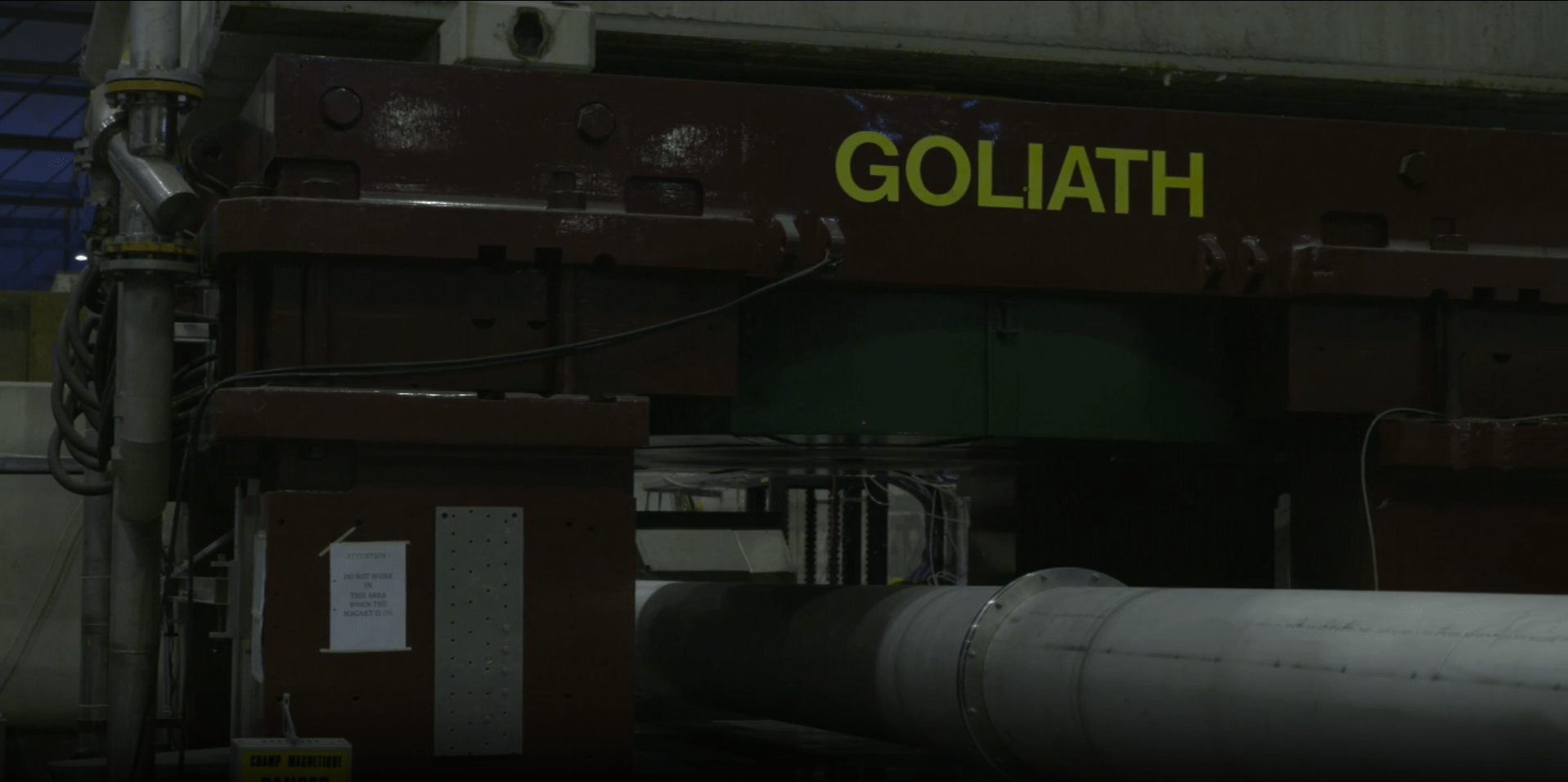
El experimento NA64 tiene como objetivo principal la búsqueda de partículas desconocidas pertenecientes a un hipotético “sector oscuro”. Estas partículas podrían representar la propia materia oscura o actuar como mediadoras de una nueva fuerza que conecte la materia visible con la materia oscura, además de la gravedad. Un candidato destacado entre estas partículas es el fotón oscuro.
Para llevar a cabo esta búsqueda, NA64 utiliza un haz de electrones con una energía de entre 100 y 150 GeV, generado por el Sincrotrón de Protones Super (SPS), que se dirige hacia un blanco fijo. En las colisiones entre los electrones del haz y los núcleos atómicos del blanco, podrían producirse partículas del sector oscuro. Los investigadores buscan señales de estas partículas observando productos de desintegración conocidos, como electrones, o detectando una pérdida de energía en la colisión, indicio de que parte de la energía fue llevada por partículas invisibles.
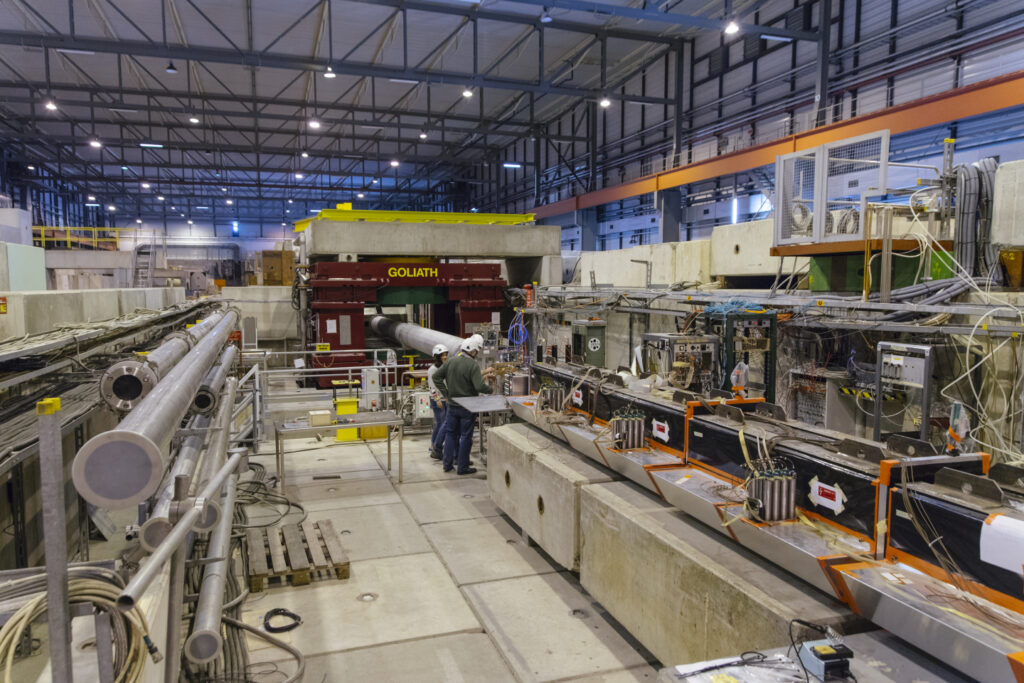
Además de los fotones oscuros, NA64 también busca axiones y partículas similares a los axiones. Estas podrían explicar propiedades de simetría no resueltas de la fuerza fuerte o actuar como portadoras de una nueva interacción fundamental. La producción de estas partículas se investigaría mediante interacciones entre fotones de alta energía, generados por los electrones del haz, y fotones virtuales emitidos por los núcleos del blanco.
El experimento también planea expandir su alcance utilizando distintos tipos de haces. Con un haz de muones —partículas similares al electrón pero más pesadas— también proveniente del SPS, se buscarán partículas nuevas que interactúen principalmente con muones. Esto podría ayudar a resolver el enigma del momento magnético anómalo del muón, una discrepancia persistente entre teoría y experimento.
Finalmente, NA64 tiene previsto emplear haces hadrónicos del SPS para investigar fenómenos de nueva física a través de la búsqueda de desintegraciones invisibles de kaones neutros y otros mesones. Estas investigaciones también podrían ayudar a identificar candidatos a materia oscura de tipo espejo.
El Instituto Milenio SAPHIR continúa fortaleciendo su presencia en experimentos de frontera en el CERN, siendo uno de los actores sudamericanos más activos en la exploración de física más allá del Modelo Estándar. Una de sus colaboraciones más significativas se desarrolla en el experimento NA64, que busca señales de partículas exóticas como los fotones oscuros y otras formas de materia oscura mediante haces de electrones, muones y positrones. En este contexto, investigadores vinculados a SAPHIR han participado en el desarrollo y operación de una plataforma de calibración móvil (Moving Table) que permite ajustar con alta precisión la alineación de los detectores durante las pruebas con haces de partículas, una herramienta clave para garantizar la calidad de los datos experimentales. Además, SAPHIR colabora en la implementación del Detector de Radiación Sincrotrón (SRD), una tecnología fundamental para la identificación de positrones en el nuevo programa de física hadrónica de NA64. Este detector contribuye a mejorar la selectividad del experimento al diferenciar positrones de otras partículas presentes en los haces, lo que resulta esencial para alcanzar los niveles de precisión requeridos en la búsqueda de señales raras. A través de esta participación técnica y científica, el Instituto Milenio SAPHIR no solo aporta conocimiento especializado, sino que también consolida su integración en redes internacionales de investigación de alto impacto, abriendo oportunidades para jóvenes investigadores y reforzando el papel de Chile en el ámbito de la física de partículas experimental.