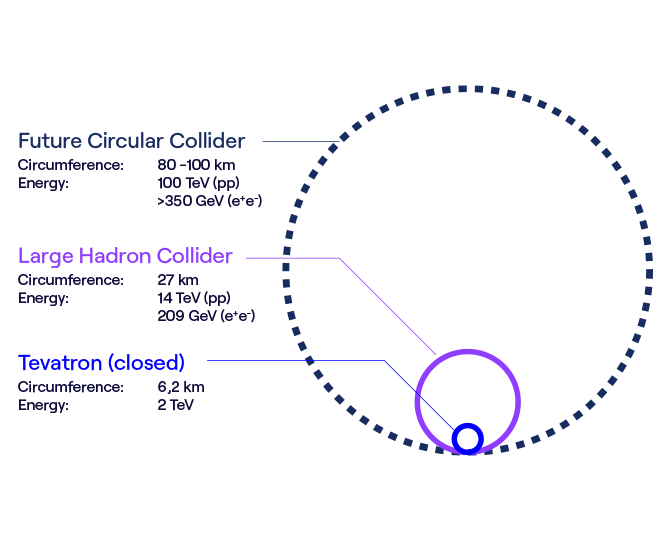
Durante los últimos 50 años, los colisionadores de partículas han sido herramientas clave para desentrañar las partículas más fundamentales y las leyes que rigen el Universo. Actualmente, el Gran Colisionador de Hadrones (LHC), con sus 27 kilómetros de circunferencia, es el acelerador de partículas más poderoso del mundo. Su fase de Alta Luminosidad (HL-LHC) ampliará significativamente su potencial de descubrimiento con un programa científico proyectado hasta el año 2040.
Sin embargo, el CERN ya mira más allá del LHC con el desarrollo del Future Circular Collider (FCC), un ambicioso estudio que busca diseñar el próximo gran acelerador de partículas. El FCC contempla la construcción de un nuevo colisionador en un túnel subterráneo de 100 kilómetros de longitud, con el objetivo de superar por un orden de magnitud los límites actuales de energía e intensidad.
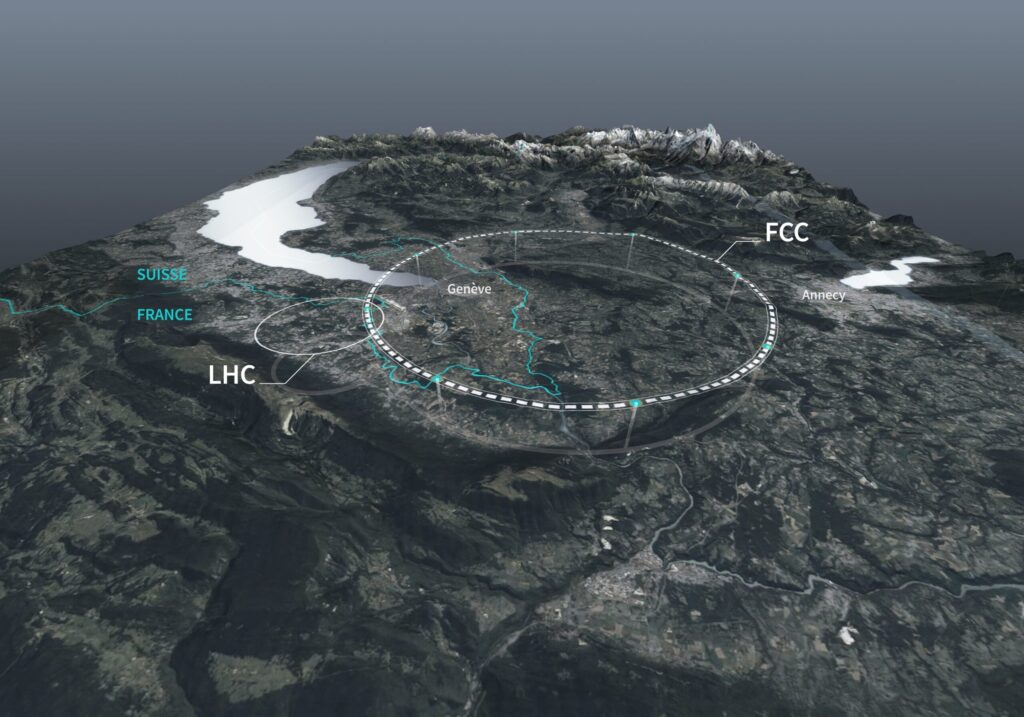
Este proyecto forma parte de un proceso de planificación científica a largo plazo, conocido como Ongoing General Study Progress, el cual involucra a múltiples equipos internacionales en tareas de diseño, evaluación tecnológica, simulaciones y definición de objetivos físicos.
En este contexto, el Instituto Milenio SAPHIR proyecta su participación futura como parte activa de esta red global de investigación, aportando con conocimiento especializado en física de partículas, instrumentación, simulaciones y desarrollo de tecnologías clave. A través de su creciente vinculación con el CERN y el fortalecimiento de capacidades locales, SAPHIR se prepara para contribuir en las distintas fases del FCC, desde el estudio conceptual hasta el desarrollo de componentes experimentales, consolidando así el rol de la ciencia chilena en los grandes desafíos de la física de este siglo.