
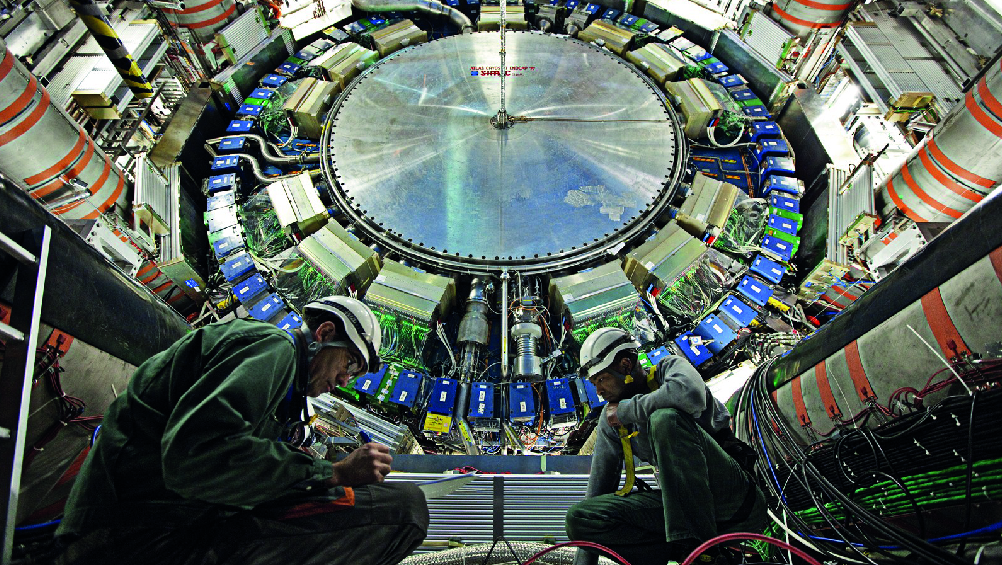
El espectrómetro de muones del experimento Atlas es usado para medir el paso de muones y antimuones producidos por el decaimiento de partículas fundamentales que se produce en las colisiones de protones en el Gran Colisionador de Hadrones. Uno de los subdetectores del espectrómetro de muones, la «Pequeña Rueda», fue reemplazada por la «Nueva Pequeña Rueda» a fines de 2021: se trata de un proyecto que involucró cuatro países: Canadá, Israel, China y Chile.
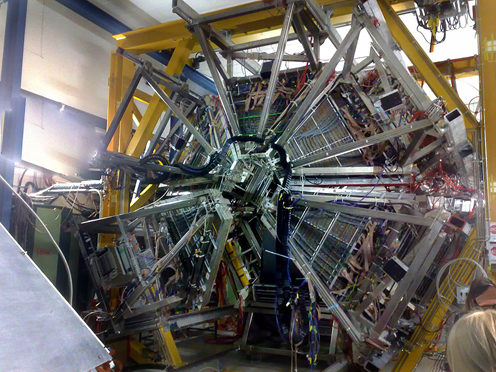
El área de física de partículas experimental del Instituto Milenio Saphir incluye una diversidad de investigaciones y desarrollos tecnológicos. Aquí se engloba no solo el desarrollo, prueba, implementación y uso de detectores de partículas (muones, neutrinos, etc.), sino también el mapeo de emisiones de gas radón en Chile, entre otros proyectos.
Además de trabajar en la creación de la “Nueva Pequeña Rueda», los equipos de investigación chilenos ligados al Instituto Milenio Saphir están trabajando en la Fase II de la mejora del experimento Atlas, un trabajo que se extenderá por cinco años a partir de 2021, donde se incluye el diseño y creación de un chip específico para el Sistema de Muon de Atlas, entre otros instrumentos para el experimento. Este trabajo es multidisciplinario y requiere de la cooperación entre especialistas de física de partículas y de ingeniería eléctrica, lo que, a su vez, permitirá el desarrollo de nuevas tecnologías y técnicas que llevarán a nuevos descubrimientos de la física de altas energías.
Otros experimentos en los que colaboran las y los investigadores del Instituto Milenio Saphir es el Observatorio Subterráneo de Neutrinos de Jiangmen (JUNO, China), el Observatorio Austral de Rayos Gamma de Amplio Espectro (SWGO) y el Laboratorio Nacional Fermi (Fermilab, Estados Unidos), entre otros.